

E219
Still airing
This show is still going. New episodes keep coming out. Follow it in Streambay and we’ll tell you when the next one is out.
TV series
42: The Answer to Almost Everything
Latest episode
S1 E219
About 42: The Answer to Almost Everything
42: The Answer to Almost Everything is a documentary TV series that premiered on ARTE on September 4, 2021. It has 1 season and 219 episodes so far and is still airing new episodes. The latest episode, Season 1 Episode 219, aired on October 24, 2026.
What would we be without mucus? Can we live on water? How much does life weigh? Finding out the answers is the aim of ARTE's new science show. In a nod to Douglas Adams's "Hitchhiker's Guide to the Galaxy", where the figure 42 is the ultimate answer to all questions, 42 tries to provide the answers.
- Documentary
Last updated
Episodes
219 episodes · 1 season
Season 1
2021 · 50 episodes · Last episode: 2 weeks ago
- E218
218. Episode 218
 E217
217. Who killed Venus?
Venus is remarkably similar to Earth, yet it is the hottest planet in our Solar System. How did it become such an inferno? Clues suggest that Venus may once have had oceans, clouds, and perhaps even life. Like detectives, scientists are piecing together evidence to solve one of the Solar System’s greatest mysteries: What transformed Venus into the hostile world we see today?
 E216
216. Do Ready Meals Make Us Ill?
Quick, convenient, and widely available, ready-made foods seem perfectly suited to modern life. As more people live in cities, they may become an even bigger part of our diets. Yet studies suggest that eating large amounts of ultra-processed food may increase the risk of obesity and depression. What might the food of the future look like?
 E215
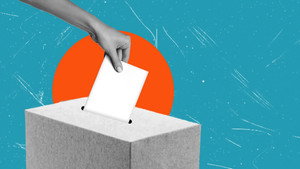
215. Are Political Parties to Blame for Everything?
Are political parties to blame for everything? Trust in political parties is declining, and voters are increasingly looking elsewhere. This crisis is more than a political quarrel: it can threaten liberal democracy itself. So who is responsible - political parties, or voters themselves?
 E214
214. Where Did the Antimatter Go?
Where did the antimatter go? According to our best theories, the Big Bang should have produced equal amounts of matter and antimatter, which would have annihilated each other. Yet matter exists and antimatter appears to be missing. Have we simply failed to detect it - or are our theories of the universe incomplete?
 E213
213. Can We Control Our Hormones?
Stress levels, sleep, sexuality: Hormones in our bodies wield enormous power over us. Can we better understand and regulate our bodies in order to take control of our hormones?
 E212
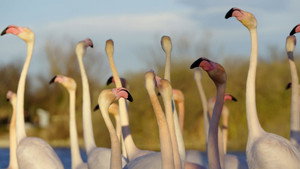
212. Can We Stop Mass Extinction?
We are facing the worst mass extinction event on Earth since the time of the dinosaurs and this time the fault lies plainly with human beings. Can we avoid the catastrophe and save the biodiversity of our planet?
 E211
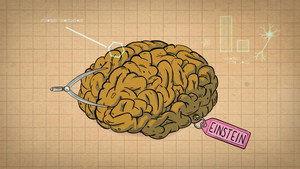
211. How Do You Become a Genius?
Albert Einstein, Marie Curie, Isaac Newton, Vincent van Gogh, Leonardo da Vinci: these visionaries have, each in their own way, transformed our understanding of the world. How did these individuals became geniuses? And what is the definition of a genius?
 E210
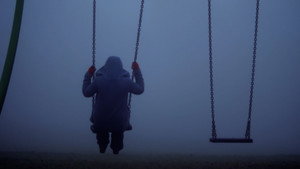
210. Is Loneliness Contagious?
There are eight billion people in our world and yet many feel lonely. Some talk of a loneliness epidemic. But can we really describe loneliness as a disease? And could this deeply human feeling be contagious?
 E209
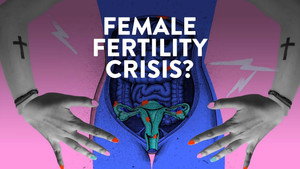
209. Is there a female fertility crisis?
Mid-season finaleMore and more women struggle to conceive or cannot have children at all, while birth rates decline and fertility clinics are booming. Are conditions like endometriosis and PCOS, environmental toxins, or other factors to blame? This documentary investigates the causes of declining fertility and the medical and social challenges surrounding reproductive health.
 E208
208. Can We Live Without Work?
We spend more than seven years of our lives working — a significant portion of our time on Earth. But as artificial intelligence increasingly takes over tasks once performed by humans, the role of traditional employment is being questioned. Could wage labor eventually be seen as only a brief phase in human history? Are we approaching the end of the work-based society and possibly one of the greatest transformations in human history?
 E207
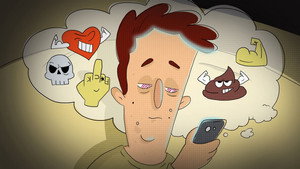
207. Does scrolling make teens stupid?
A hotly debated topic: the impact of social media on young people. While Australia has already banned its use for those under 16, it's clear that likes, comments, and endless feeds bring both risks and opportunities.
 E206
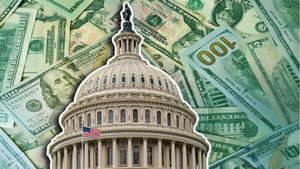
206. Can states go into debt indefinitely?
In reality, no state ever repays its debts. And yet, insolvency doesn't necessarily lead to bankruptcy. Public debt isn't just numbers; it also depends on growth, interest rates, policy, and, above all, confidence. When does debt become useful, and how can it become a threat?
 E205
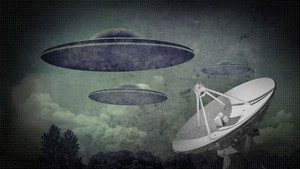
205. What Lies Behind UFOs?
Are UFOs being unfairly dismissed? For a long time, mysterious flying objects were associated mainly with science fiction and speculation. But scientists are now taking these phenomena more seriously and investigating what may actually be behind reports of unexplained sightings. Could UFO research lead to a completely new discovery? And how can science explain something that currently seems impossible to understand?
 E204
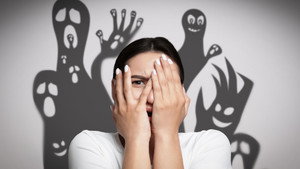
204. Does a Trauma Lie Dormant in Everyone?
When the subject of trauma arises, most people immediately think of extreme events: war, violence, severe accidents, or natural disasters. And indeed, such experiences can leave deep psychological scars. But what if trauma does not always manifest itself loudly? What else can give rise to trauma, and how can one even tell if one is affected?
 E203
203. Can AI Feel Us?
Our feelings are something very intimate, something that belongs only to us—or at least we wish it did. But now, artificial intelligence (AI) can read our emotions and adapt to them. And if AI can handle our emotions so well, wouldn't it be easy for it to manipulate them? Or even control them?
 E202
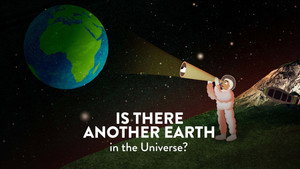
202. Is there another Earth in the universe?
"There is no Planet B!" This slogan is a constant at all pro-climate demonstrations. But what would become of humanity if, one day, Earth became uninhabitable? Could another celestial body serve as our refuge? Astrophysicists have never been closer to finding an answer.
 E201
201. Can we change?
Is our personality fixed from birth – or can we consciously change it? Can composure be learned, conscientiousness trained, and sociability increased? "Personality is not set in stone," says personality psychologist Franz Neyer, contradicting the long-held dogma that character is firmly fixed after the age of 30.
 E200
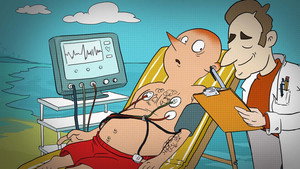
200. Is vacation really relaxing?
Need a vacation? It's a sign that it's time to rest and relax. Yet, scientists can't explain what happens when we get away from it all, nor why and how vacations make us feel good. Given that they're such an integral part of our lives, how is it that their effects are so little understood?
 E199
199. How does trash change the world?
To be remembered, to leave a legacy – that's what everyone wants. But what if, in 100,000 years, aliens visit the extinct Earth? What legacy would they find? Probably our trash. From the highest mountains to the oceans, from the atmosphere to our bloodstreams, it accumulates everywhere. Despite sorting and recycling, the question remains: Is trash our legacy?
 E198
198. Has Globalisation Failed?
With wars, financial crises, and energy crises, global trade seems to be suffering. But is globalisation on the way out? Or can it reinvent itself?
 E197
197. Do We Need Siblings?
Why do some brothers and sisters become rivals while others become lifelong allies? How does birth order - being the oldest, youngest, or somewhere in between - shape our personality and relationships? The episode also examines only children, who have long been stereotyped as spoiled, neurotic, or lonely. Are these assumptions true, or might only children actually have advantages compared with those who grow up with siblings?
 E196
196. Why Are We So Competitive?
From childhood onwards, we compare ourselves to others and try to be better than our neighbour. But where does this competitive streak come from? And when is it a good thing to be competitive and when is it harmful?
 E195
195. Is Brain Washing Possible?
Is it possible to ‘reboot’ a human brain like we can for a computer? A dream for some and a nightmare for most people, this episode of 42 looks at the science on the subject. AndiIf we can put the human mind back to ‘factory settings’ what does this mean for our freedom as individuals?
 E194
194. Black Holes: A Future Energy Source?
We know black holes as destroyers: they tear apart stars, devour light and bend space-time. At the same time, they are among the largest sources of energy in the universe and could easily fulfil all our energy needs for millions of years. But is it possible to harness their formidable power?
 E193
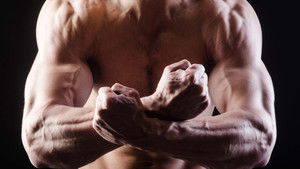
193. Do we need the alpha male?
Dominant, strong, a “real man.” Women want him, men want to be like him. This is the image of the “alpha male” portrayed by many masculinity influencers—some of them with millions of followers. Where does this idea of the alpha come from? Is he truly the superior man, as nature intended? Or is it all nonsense?
 E192
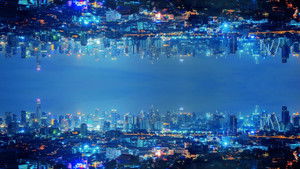
192. What if life were mirrored?
Imagine for a moment that everything was reversed. It may sound mind-boggling, but it is not entirely absurd. Many of the molecules that make up life on Earth have a symmetrical counterpart—a mirror-image twin known as an enantiomer. These mirror molecules represent a promising avenue for the discovery of new and potentially more effective medicines. But what if we could go even further? What if it were possible not only to mirror individual vital molecules, but entire living organisms—bacteria, for example? What would happen if we managed to reverse life itself? And what would our world look like then?
 E191
191. Do Emotions Control the Markets?
The stock market is the temple of rationality, figures, data and models. But what happens when emotions drive prices? When panic takes over from analysis and heady euphoria pushes share prices through the roof? Is the world of finance actually ruled by human emotion?
 E190
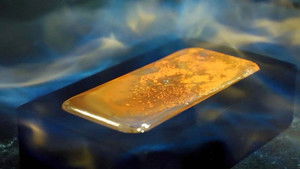
190. Why Do We Love Gold?
The term "gold rush" speaks volumes about our special relationship with the shiny precious metal. For thousands of years, gold has influenced people’s lives and the history of the world. But why are we so obsessed with gold?
 E189
189. How monogamous are humans?
Monogamy – a lifelong promise of love or an outdated ideal? Despite high divorce rates and the increasing acceptance of alternative relationship models, monogamy remains an emotional anchor for many people. However, since many of the cultural constraints have disappeared, monogamy is a relationship model in flux.
 E188
188. Why do we sing?
Songs are considered part of humanity's cultural heritage, and all over the world, their social functions are similar: to celebrate, to mourn a loved one, or to express love. But why use song for all of this? Does language have certain limitations? What is it about singing or hearing others sing that fascinates us so much?
 E187
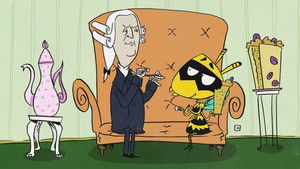
187. Are Wasps Game Changers of Evolution?
Wasps are much more than just an inconvenience for al fresco diners. As one of the very first social species on our planet, they could help solve an evolutionary puzzle: Does altruism really exist?
 E186
186. Are We An Evolutionary Superspecies?
From the deserts of Australia to the steppes of Siberia, no other mammal has colonised more habitats than humans. More than eight billion people affect all life on earth to such an extent that some scientists speak of the Anthropocene - the age of man, in which humans have become the most important influencing factor on the planet. But why are we so successful?
 E185
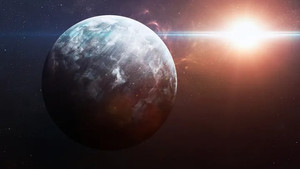
185. Does Planet Nine Really Exist?
In 2006, the International Astronomical Union voted to demote Pluto to a "dwarf planet," reducing the official number of planets in the solar system to eight. According to Mike Brown, the astronomer behind Pluto's declassification, there is, however, a wealth of evidence suggesting the existence of a ninth planet.
 E184
184. Why Do We Love Horror?
Why do we like to be terrified by scary movies? When watching horror, people experience an intense rollercoaster of emotions and initial studies suggest that viewing horror film can develop better stress resistance…
 E183
183. Can Our Brains Still Concentrate?
In a world full of push notifications, quickfire TikTok videos and constant distraction, deep concentration seems to be lost. But how bad is the situation really? Are our concentration skills suffering? Or has our attention perhaps even improved - and adapted to our modern, high input social media world?
 E182
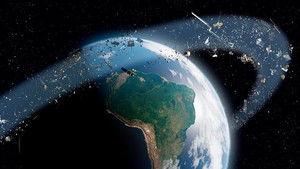
182. Is Space Debris Dangerous for Earth?
Everything that goes up must come down. But what about space debris? Will rockets and unused satellites eventually come crashing down to Earth? And is this a danger to humans and other life on Earth?
- E181
181. How Does the Female Orgasm Work?
For centuries, female sexuality was neglected and considered uninteresting by men. The apogee came in the 19th century, when doctors and pioneering psychiatrists concocted the wildest theories surrounding female pleasure. It's high time to answer the question: what do women truly desire in bed, and what brings them the greatest pleasure?
 E180
180. How Powerful Are Images?
Would Donald Trump have won the US election if not for the now-iconic photo of him with a bloody ear? Would the US have invaded Iraq if not for the fake photos of Colin Powell? Or would the Vietnam War have lasted longer if not for the infamous photo of the burned girl? Images have immense power in politics, but what are the reasons for this? And, how can we protect ourselves from their influence?
 E179
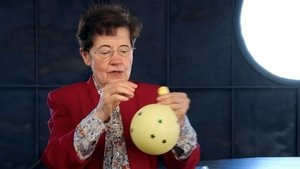
179. What was there before the Big Bang?
The planets, the galaxies, the universe: Has it always been there – or was there a beginning? The Big Bang, from which all the wonderful phenomena we can observe and study today originated? But if this unique moment truly existed, what exactly brought it about?
 E178
178. ...We Make Free Decisions?
In a democratic society, decisions are taken on the basis of free will. But is this really always the case? Since we know that the brain sometimes goes into 'autopilot' mode, freedom of choice may just be an illusion. What if our choices were dictated more by physical or neurological factors?
 E177
177. Does Society Need Alcohol?
Success, failure, birthdays, funerals… any occasion can be an excuse to drink. However, the line between pleasure and addiction is very thin. Alcohol is one of the most toxic substances, yet it facilitates social interaction. Is it so deeply ingrained in our societies that it's impossible to stop using it?
 E176
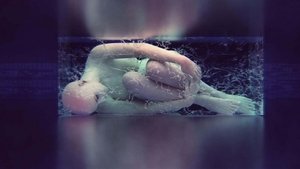
176. Can Humans Hibernate?
Hibernation in humans – so far, it's pure science fiction. However, some researchers suspect that humans might possess the genetic predisposition for hibernation. An artificially induced state of dormancy would save enormous resources and would also be of great interest for space travel. But could this be implemented in practice?
 E175
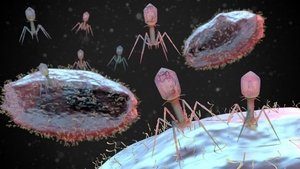
175. Is a Superbug Pandemic Coming?
Our use and overuse of antibiotics means that bacteria – those little masters of evolution – are becoming increasingly capable of defending themselves against them. Superbugs, which are resistant to at least three types of drugs, are now becoming an increasingly dangerous phenomenon. More than 1.3 million people die each year from infections with antibiotic-resistant bacteria. Are we facing another pandemic?
 E174
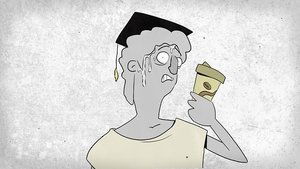
174. Optimisation: Is It Making Us Mad?
On social media everyone seems to be optimising themselves into healthy, perfect humans. But is our search for perfection making us crazy? And is our obsession with personal development leading us astray?
 E173
173. Why Does Music Move Us?
Music has immense power: it can lift or lower our mood and make us forget the world. But why is music so important to human beings? And how does it move us so profoundly?
 E172
172. The Age of Fire
Humans are the only species that can produce fire. For a long time, we lived intimately with fire, which helped our development. But today fire seems like a destroyer, with ever more intense wildfires threatening our cities, driven by climate change. How can we live better with the flames?
 E171
171. Was Stone-Age Man Dumber Than Us?
We sometimes think of our ancestors in the stone age as primitive beings, unable to cope with complex tasks or the demands of our highly complex modern society. But were our ancestors from tens of thousands of years ago really less intelligent than us?
 E170
170. Does Failure Help Us Succeed?
Setbacks and bad decision often leave a bitter taste in the mouth, but they can help you bounce back. Research shows that scientific and technical advances are often the result of trial and error and in psychology, it is accepted that failure makes us more resilient. So should we embrace failure more often to succeed in life?
42: The Answer to Almost Everything FAQ
When is the next episode of 42: The Answer to Almost Everything?
A date for the next episode of 42: The Answer to Almost Everything hasn't been announced yet. Follow 42: The Answer to Almost Everything in the Streambay app and you'll be notified as soon as a new episode airs.
When did the latest episode of 42: The Answer to Almost Everything come out?
The most recent episode of 42: The Answer to Almost Everything, Season 1 Episode 219, aired on October 24, 2026.
How many seasons of 42: The Answer to Almost Everything are there?
42: The Answer to Almost Everything has 1 season with 219 episodes in total.
When did 42: The Answer to Almost Everything first air?
42: The Answer to Almost Everything first aired on ARTE on September 4, 2021.
How do I get notified when new episodes of 42: The Answer to Almost Everything are released?
Download the Streambay app, follow 42: The Answer to Almost Everything, and you'll get a push notification the moment each new episode is released.
More like 42: The Answer to Almost Everything
-

7.2
-
5.6
-
4.8
-

10.0
-
8.2
-

S1 · E552 3 months ago
MBC Documantary Prime
-

7.6
-
6.1
-
7.1
-
8.4
-

10.0
S18 · E260 4 years ago
凤凰大视野
-
6.3
Never miss 42: The Answer to Almost Everything.
Download Streambay and follow 42: The Answer to Almost Everything. We’ll notify you the moment a new episode is released. It’s free, with no sign-up and no personal information required.
Coming soon to
App Store
Get it on
Google Play